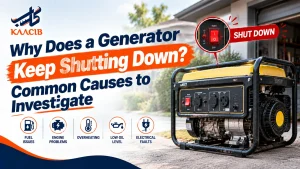
The power goes out, the generator kicks in the way it always does, and then it shuts itself back off ten minutes later without any warning you noticed. Or maybe it runs fine until the fridge compressor kicks on, and dies the second it does. A generator that keeps shutting down isn’t malfunctioning at random. It’s reacting to something specific, and what was happening in the moment it quit is usually the best clue available before anyone opens a manual or calls for help.
What Was Happening Right Before It Shut Down?
The single most useful question after a shutdown isn’t “what’s wrong with it.” It’s “what was it doing at the time.” Was it under heavy load, with several appliances running, or was it barely being asked to do anything? Did it shut off the instant it started, or after it had been running for a while? Did a warning light or an alarm sound come with it, or did it just go quiet?
Sorting through those details places a shutdown into one of a small number of recognizable situations, and each situation points toward a different set of likely causes. A generator that dies the moment a large appliance switches on is telling a different story than one that runs fine for twenty minutes and then quietly stops on its own.
When It Shuts Down Under Load
If the generator holds steady with little or nothing connected but shuts down as soon as a demanding appliance starts, especially something with a compressor or motor, the load itself is a reasonable place to start looking. Every generator has a limit to how much it can supply at once, and some appliances draw far more current for a brief moment at startup than they do once they’re actually running. A generator sitting right at its limit can handle the running load fine but get pushed past it by that startup spike.
A shutdown like that doesn’t necessarily mean the generator is undersized or broken. It means the combination of what’s connected and when it switches on is asking for more than the unit can deliver in that instant. Noticing which appliance was starting up right as the shutdown happened, rather than just noticing that “too much was running,” is the detail that actually narrows things down. A single shutdown the first time a new appliance was added is worth watching rather than acting on immediately. The same appliance triggering a shutdown every time it starts, on the other hand, is a pattern worth taking seriously, since it points toward a consistent mismatch between that appliance’s startup demand and what the generator can supply at that moment, rather than a one-time coincidence.
When It Starts Fine but Stops Partway Through
A generator that starts normally, runs acceptably for a stretch, and then shuts down on its own, without anyone adding load, is describing something different from an overload. A few explanations tend to fit this pattern more than others.
Fuel-related issues are common here. A generator running low on fuel, or dealing with a partially clogged fuel line or filter, can run fine briefly before the engine starts starving for fuel and eventually stops. Fuel that has been sitting unused for a long stretch, particularly in a generator that only gets started occasionally, can also degrade enough to cause inconsistent running or stalling, which is a different problem from simply running low. Airflow restriction can behave similarly: a clogged air filter lets the engine run acceptably at first but causes it to run poorly, and eventually shut down, once it’s been working for a while. Overheating fits this pattern too, particularly if the unit has been running for an extended stretch, sits somewhere with poor ventilation, or has debris blocking the area around it that restricts normal airflow.
When Oil, Heat, Fuel, or a Protection Sensor May Be Involved
Many generators are built with protective systems that shut the engine down on purpose rather than letting it run into damage. A low-oil sensor is one of the more common examples: if oil has dropped below a safe level, the sensor can cut the engine before the moving parts start damaging themselves from lack of lubrication. A shutdown like this can happen with little warning and isn’t a sign the generator is failing on its own; it’s the generator doing exactly what it was designed to do.
Larger standby units, the kind installed as home backup systems rather than carried around as portable units, often add onboard monitoring for things like temperature, oil condition, and electrical faults, sometimes displaying a fault code or warning light when something trips a protection. A portable generator typically doesn’t have this level of onboard diagnostics, and its shutdown causes tend to sit closer to the mechanical side, fuel delivery, a fouled spark plug producing a weak spark, or a dirty carburetor restricting fuel flow as demand increases. Not every generator has the same sensors, the same cooling setup, or the same protective systems, so a cause that fits one type doesn’t automatically explain a shutdown on a different kind of unit.
What You Can Check Safely, and When to Call for Generator Repair
A homeowner can reasonably observe quite a lot without opening anything up: whether a warning light or fault code appeared, what was running or starting up right when the shutdown happened, whether the shutdown was immediate or came after a period of normal operation, whether fuel looks obviously low, and whether anything is visibly blocking airflow around the unit. Whether the shutdown has happened once or repeatedly matters as much as any of these individual observations. A single shutdown that doesn’t repeat after an obvious fix, more fuel, a clearer space around the unit, one less appliance running, is often resolved. A shutdown that keeps happening under similar conditions despite those adjustments is telling you the underlying cause hasn’t actually been addressed yet. Where the manufacturer’s own instructions describe a simple external oil-level check, that’s also reasonable to look at.
What isn’t reasonable is repeatedly restarting a generator that shut down from overheating, opening a fuel system, working on energized electrical components, or trying to bypass a protective sensor to keep the unit running. The reasoning behind those protections is straightforward: the alternative is expensive damage or a genuine safety risk. If the pattern points toward something beyond a simple, obvious fix, or the generator keeps shutting down after the obvious things have been checked, an actual diagnosis through Kaacib’s generator maintenance and repair service is a more sensible next step than continuing to guess.
A generator that shuts itself down isn’t being unreliable for no reason. It’s responding to a specific condition, whether that’s a demand it couldn’t meet, a protective system doing its job, or something building up gradually until it finally tripped a limit. Reading when and how it happened is most of the way to knowing what to do next.