Market Competition & Positioning
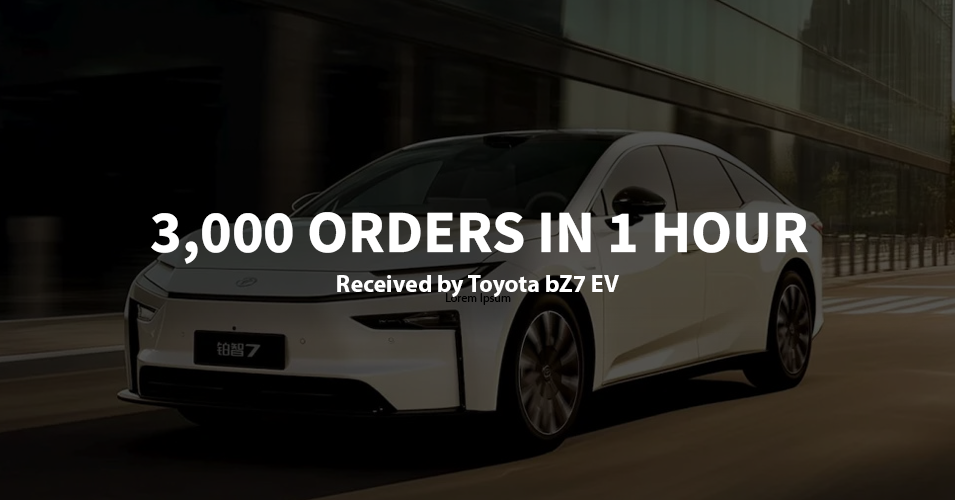
The Toyota bZ7 enters a highly competitive Chinese EV market dominated by brands like BYD and Tesla. However, its aggressive pricing and integration with local tech ecosystems give it a strategic edge. Unlike many global EVs, the bZ7 is tailored specifically for Chinese consumers, which may explain its rapid initial success.
Why the bZ7 Sold 3,000 Units So Fast
Several factors contributed to the strong first-hour sales:
- Competitive pricing in the affordable luxury EV segment
- Integration with Huawei and Xiaomi ecosystems
- Strong brand trust associated with Toyota
- Increasing demand for smart, connected vehicles in China
Challenges Ahead
Despite its strong launch, the bZ7 may face challenges such as:
- Intense competition from local EV manufacturers
- Long-term battery performance concerns
- Dependence on China-specific tech integrations, limiting global scalability
EV Infrastructure in Pakistan (Expanded Insight)
Pakistan’s EV adoption is still in early stages due to limited charging infrastructure and high import duties. However, recent government incentives and private sector investments are gradually improving the situation. If Toyota introduces the bZ7 locally, success will depend on:
- Expansion of fast-charging networks
- Competitive pricing after duties and taxes
- Consumer awareness and trust in EV technology
Future Outlook
The success of the bZ7 could signal Toyota’s stronger push into the global EV market. If similar models are adapted for international markets, including Pakistan, Toyota could become a major player in the affordable luxury EV segment worldwide.