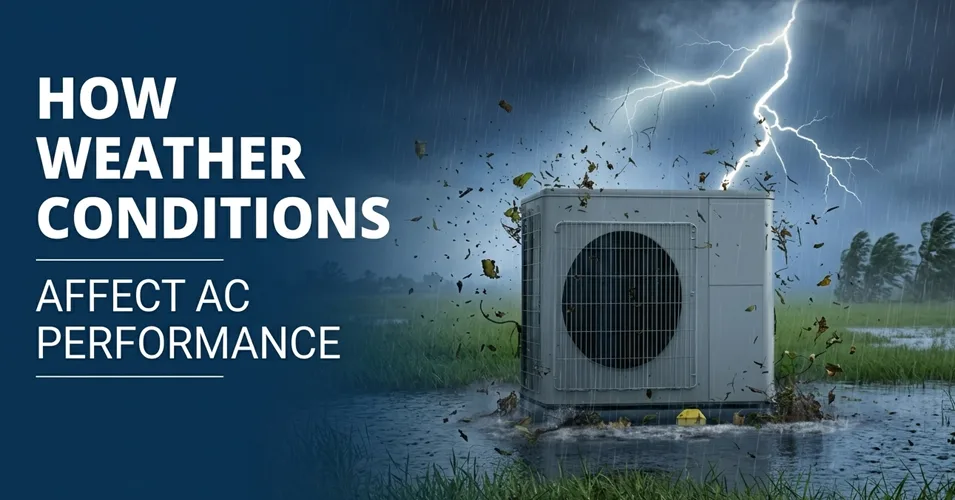
What Heat and Humidity Start Doing to an AC System
Air conditioners react differently once outdoor conditions become heavier.
High heat forces longer cooling cycles. Rooms take more time to lose warmth, especially during afternoons when walls and ceilings have already absorbed heat from outside.
Humidity changes comfort in another way. Air begins feeling dense and sticky even when temperature drops.
Instead of focusing only on cooling, the system now has to pull excess moisture out of indoor air as well. That extra workload slows overall performance and keeps the room from feeling fully comfortable.
Nothing stops working immediately. Cooling just becomes less efficient under continuous strain.
Weather Conditions That Usually Affect Cooling Performance
Extreme Afternoon Heat:
Peak daytime heat pushes the outdoor unit harder than usual. Releasing indoor heat becomes slower once surrounding temperatures rise too high.
Cooling still happens, just with more effort and longer runtime.
Humid Conditions After Rain or Coastal Air:
Rooms often feel damp even with AC running.
Moisture in indoor air changes how cooling feels on the skin, which is why lower temperatures sometimes still feel uncomfortable.
Dusty Outdoor Weather:
Dry conditions carry more airborne dust into outdoor components. Over time, buildup begins affecting airflow and heat release.
Efficiency gradually drops without creating an obvious failure.
Sudden Temperature Shifts:
Systems that perform normally in moderate weather sometimes struggle once temperatures rise rapidly.
Existing maintenance issues become easier to notice during these periods because overall demand on the AC increases.
Weather usually exposes weakness in performance rather than creating the problem on its own.
Cooling becomes inconsistent before most people realize something is wrong.
One room feels comfortable. Another stays warm for much longer, even with doors closed and airflow running.
Electricity usage starts climbing during hotter weeks. The AC stays on longer, yet comfort inside the house doesn’t improve at the same pace.
A few smaller changes usually appear first:
- air coming out feels weaker during afternoons
- humidity lingers indoors after rain or humid evenings
- cooling takes noticeably longer after the system starts
- rooms lose cool air faster once the AC turns off
In some homes, the unit keeps running almost continuously during peak heat without properly settling the room temperature.
Performance doesn’t collapse suddenly. Weather simply pushes existing strain further until it becomes noticeable during daily use.
Why Cooling Starts Feeling Weaker During Harsh Weather
An AC can stay fully operational and still struggle to cool the room properly during extreme weather.
During very hot afternoons, indoor heat builds faster than the system can remove it. Walls, ceilings, and closed rooms hold onto warmth for hours, so cooling takes noticeably longer.
Humidity creates a separate problem. Lower temperature alone doesn’t make the room feel comfortable because moisture remains trapped in the air. The AC keeps running, but the space still feels slightly sticky or heavy.
Dust buildup adds more pressure during dry weather. Airflow weakens gradually, especially when filters or outdoor components are already carrying dirt from continuous use.
In Karachi homes, this usually becomes noticeable during peak summer weeks. AC runtime increases, electricity usage climbs, and cooling consistency drops across different rooms even though the unit itself is still running normally.
How We Prepare AC Systems for Karachi Weather at Kaacib
Preparation starts before peak heat arrives. Once temperatures rise fully, existing airflow or cooling issues become much harder to ignore.
We usually begin by checking how efficiently the system is circulating air across the space. Weak airflow in one room often points toward buildup, restricted filters, or strain inside the system.
Outdoor units also need attention during Karachi’s dusty conditions. Dirt around coils and vents reduces heat release, which directly affects cooling speed during hotter afternoons.
Humidity creates another layer of pressure. Systems already running under restricted airflow struggle more once indoor moisture increases during coastal weather.
This is part of the AC maintenance work we handle through our AC maintenance services in Karachi.
The goal isn’t only to keep the unit running. It’s to help the system maintain stable cooling when weather conditions become more demanding.
Keeping Cooling Performance Stable Through Seasonal Changes
Weather keeps changing, but small maintenance habits usually decide whether the AC handles those changes smoothly or starts struggling early.
- Clean filters before heavy summer usage begins
Dust buildup becomes a bigger problem once runtime increases during hotter months. - Keep outdoor units free from blocked airflow
Heat escapes less efficiently when vents and surrounding areas collect dirt or obstruction. - Notice changes in cooling speed early
Longer cooling times often appear before larger performance issues become obvious. - Avoid keeping rooms sealed for long periods without ventilation
Trapped humidity changes how comfortable indoor air feels, even at lower temperatures. - Don’t wait for cooling to become noticeably weak before servicing
Most systems show smaller performance changes weeks before larger strain becomes visible.
Regular maintenance usually matters most during weather extremes, not during moderate conditions when the system is under less pressure.
What Rising Temperatures Often Reveal
Weather doesn’t damage an AC overnight. It exposes weak airflow, buildup, and maintenance issues that were already developing inside the system.
Hot afternoons, humidity, and dust simply make those problems easier to notice.
In many Karachi homes, cooling starts feeling inconsistent long before the unit actually fails. Rooms take longer to settle, airflow weakens during peak hours, and comfort drops even though the AC keeps running.
Handling those changes early usually keeps the system stable through heavier weather instead of forcing it to work under constant strain.