When Wooden Furniture Starts Losing Its Finish
It doesn’t happen all at once. The surface just stops looking the way it used to.
Light hits it differently. Some areas appear dull, others slightly darker. Edges begin to lose their sharpness, especially where hands touch the most.
At first, it feels like dust or temporary wear. You clean it, and it looks better for a while.
Then the same spots change again.
In many homes we visit at Kaacib, the pattern is similar. The furniture isn’t damaged, but it no longer looks consistent across its surface.
That’s usually where the finish has started wearing down, even if the structure underneath is still intact.
What Causes Wooden Furniture to Wear Out Over Time
Wood doesn’t change on its own. It reacts to how it’s used and what it’s exposed to.
In most homes, a few things keep affecting the surface and structure:
- Regular contact in the same spots
Areas that get touched often lose their finish faster than the rest. - Exposure to moisture
Even small amounts, over time, affect how the surface holds its texture. - Direct sunlight
Some sections fade or darken depending on how light hits them during the day. - Dust settling and staying on the surface
It may seem harmless, but it slowly affects the finish if not cleaned properly. - Cleaning methods that are too harsh
Strong chemicals or rough materials wear the surface instead of maintaining it.
None of these cause immediate damage. They work slowly, changing how the furniture looks and feels over time.
Small Habits That Help Keep Wooden Furniture Looking Consistent
Furniture doesn’t need heavy maintenance. It usually comes down to how it’s handled day to day.
Clean Without Wearing the Surface Down:
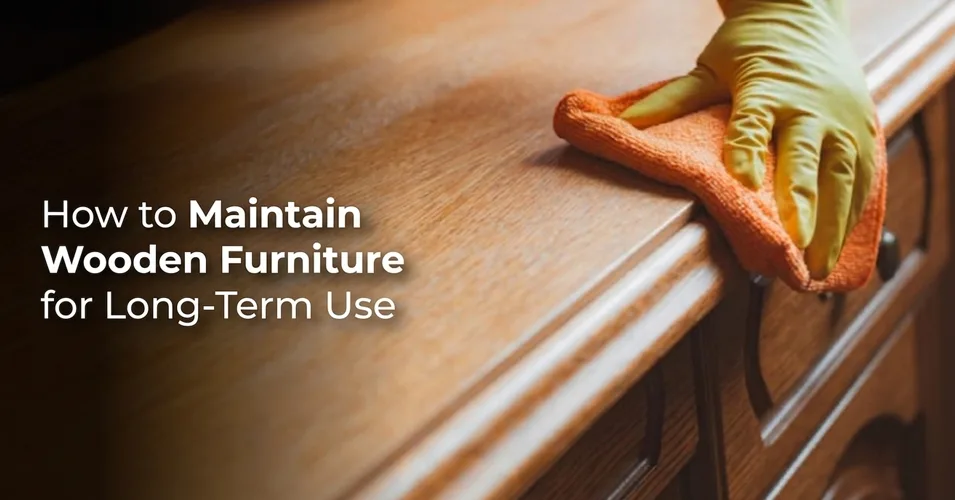
Dust settles quickly, especially on flat areas. A soft cloth does the job most of the time.
Rough wiping or strong cleaners tend to dull the finish instead of helping it.
Don’t Let Moisture Sit:
Spills don’t always leave a mark immediately. But when moisture sits, it changes how the surface behaves.
Drying it early usually prevents that shift.
Watch High-Contact Areas:
Edges, handles, and table tops wear faster because they’re used more.
A little attention there keeps the surface from becoming uneven over time.
Avoid Direct Exposure Where Possible:
Sunlight affects certain sections more than others. That’s why some parts fade while others don’t.
Even small adjustments in placement can make a difference.
Keep It Consistent, Not Occasional:
Occasional deep care doesn’t hold as well as small, regular attention.
Most of the time, it’s the consistency that keeps the finish stable.
Mistakes That Gradually Damage Wooden Furniture
Damage doesn’t always come from neglect. Sometimes it comes from how the furniture is handled while trying to maintain it.
Cleaning is a common example. Using strong solutions or scrubbing too hard makes the surface look clean for the moment, but it slowly removes the finish.
Water is another factor that gets underestimated. A quick spill may seem harmless, but repeated exposure in the same spot starts changing the texture.
Placement also plays a role. Furniture kept in direct sunlight or near heat sources doesn’t wear evenly. Some areas fade, others stay the same.
In some cases, the issue is over-polishing. Applying products too often builds a layer that affects how the surface feels rather than protecting it.
None of these cause immediate damage. They change the surface gradually until the difference becomes visible.
How We Maintain Wooden Furniture at Kaacib
We don’t treat maintenance as polishing alone. The first step is understanding what has actually changed on the surface.
In many homes we visit, the finish looks uneven because of repeated contact or exposure, not because the furniture is old.
We usually check how the surface reacts under light and touch. Some areas stay smooth, others feel slightly dry or worn. That difference guides what needs to be done.
Sometimes light cleaning and conditioning are enough. In other cases, the finish needs to be restored so the surface looks consistent again.
We avoid overworking the wood. If the structure is fine, there’s no need to strip everything down.
This is part of the work we handle through our furniture repair service in Karachi.
The goal isn’t just to make it look new for a moment. It’s to keep the surface stable with
Keeping Wooden Furniture in Good Condition Over the Years
Furniture doesn’t need constant care. It just needs to be handled in a way that doesn’t wear it out unevenly.
- Keep cleaning light and regular
Heavy cleaning once in a while affects the surface more than small, consistent care. - Avoid letting the same spots take all the stress
Table edges, armrests, and corners tend to wear faster if used the same way every day. - Control exposure to moisture and heat
Small changes in environment affect wood more than expected over time. - Pay attention to early changes in texture or finish
Slight dullness or dryness usually appears before visible wear. - Don’t over-treat the surface
Too many products can affect how the wood feels instead of protecting it.
Most of this comes down to balance. Not too much, not too little, just enough to keep the surface stable.
Final Thought on Maintaining Wooden Furniture
Wood doesn’t lose its quality overnight. It changes slowly, usually in places that get the most use.
A surface dulls in one area. An edge wears faster than the rest. Nothing major, just uneven changes that build over time.
From what we see at Kaacib, furniture lasts longer when those small changes are noticed early. Not fixed aggressively, just handled before they spread.
It’s not about keeping it perfect. It’s about keeping it consistent.