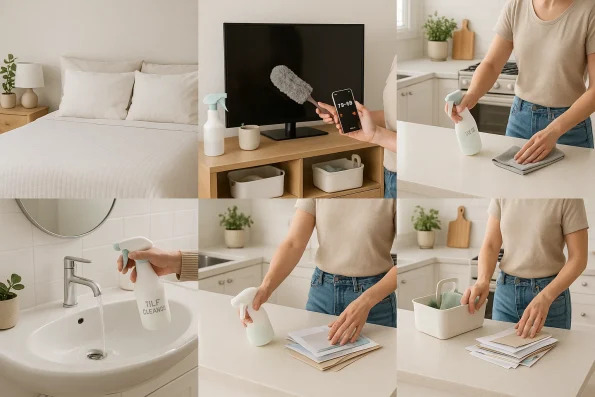
When a Home Starts Feeling Less Clean Over Time
A home doesn’t suddenly become unhygienic. The change happens gradually, often without anything looking obviously wrong.
Floors are cleaned, surfaces are wiped, and everything appears in place. Still, something feels slightly off after a few hours. The air feels heavier. Dust settles back quickly. Certain areas don’t stay fresh for long.
In many homes we visit at Kaacib, the issue isn’t a lack of cleaning. It’s how quickly things return to the same state.
Kitchens pick up residue from daily use. Bathrooms hold moisture longer than expected. Corners and fabrics carry what regular cleaning doesn’t fully remove.
Nothing stands out at once. The space just doesn’t feel as clean as it should.
What Affects Hygiene Inside a Home
Hygiene doesn’t depend on one thing. It’s shaped by how the space is used throughout the day.
In most homes, a few factors quietly affect how clean the environment actually stays:
- Dust settling in unnoticed areas
Corners, under furniture, and along edges collect more than what’s visible on open surfaces.
- Moisture in kitchens and bathrooms
Damp areas change how surfaces behave and affect overall freshness.
- Frequent contact points
Switches, handles, and commonly used surfaces pick up more than expected during daily use.
- Air staying trapped indoors
Closed spaces hold particles longer, especially when ventilation is limited.
- Irregular cleaning patterns
Some areas get cleaned often, others get missed repeatedly, creating imbalance.
None of these stand out on their own. Together, they shape how hygienic a home actually feels over time.
Simple Ways to Maintain Home Hygiene Daily
Hygiene doesn’t come from one big cleaning effort. It builds through small actions that repeat every day.
Keeping Surfaces From Building Up:
Dust and residue settle faster than expected. A quick wipe across commonly used surfaces usually keeps things from layering over time. It doesn’t take long, but skipping it for a few days changes how the space feels.
Managing High-Contact Areas:
Handles, switches, and frequently touched spots carry more use than visible surfaces. Cleaning these regularly makes a noticeable difference, even if the rest of the room looks fine.
Letting Air Move Through the Space:
Closed rooms tend to hold onto particles. Opening windows for a short time helps clear the air. It’s a small step, but it changes how the space feels afterward.
Handling Moisture Early:
Kitchens and bathrooms carry moisture that affects hygiene if left unattended. Drying surfaces and keeping airflow helps prevent buildup that isn’t always visible.
Staying Consistent With Small Tasks:
Most of this doesn’t require extra effort. It comes down to keeping things from accumulating rather than cleaning everything at once. Hygiene usually stays stable when these small habits remain consistent.
Why Clean Homes Still Feel Unhygienic Sometimes
A space can look clean and still feel off after a while. Floors are done, surfaces are wiped, yet something doesn’t sit right. That usually comes from what isn’t being addressed.
Air stays the same. Moisture lingers in certain areas. Dust settles in places that don’t get touched regularly. So the surface looks clean, but the environment doesn’t change much.
In many homes we visit at Kaacib, this shows up as a difference between appearance and feel. The space looks maintained, but it doesn’t feel fresh for long.
Cleaning removes what’s visible. Hygiene depends on what keeps coming back.
How We Maintain Hygiene During Cleaning at Kaacib
Cleaning starts with what’s visible, but hygiene depends on what usually gets missed.
In most homes we visit at Kaacib, surfaces are already maintained to some extent. The difference comes from how deeper areas are handled.
We don’t move in a fixed pattern. Attention shifts toward where buildup tends to stay longer. Corners, edges, areas behind furniture, and sections that don’t get regular airflow.
High-contact points also get separate focus. Switches, handles, and frequently used surfaces behave differently from the rest of the space.
Moisture-prone areas are handled with more care. Kitchens and bathrooms often need more than just surface cleaning to maintain hygiene.
The goal isn’t just to make the space look clean for the moment. It’s to reduce what keeps returning into the environment.
Keeping Hygiene Consistent Without Extra Effort
Hygiene usually breaks when everything is left for later. Small things build up, then the space starts feeling off again.
Keeping it consistent doesn’t require more work. It usually needs better timing.
- Handle small cleaning as part of the day
Waiting for a “cleaning day” lets buildup return faster than expected.
- Don’t skip the same areas repeatedly
Corners, edges, and low-visibility spots tend to get ignored, then affect the whole space.
- Let fresh air in, even for a short time
Air movement helps more than most people realize.
- Keep moisture from sitting too long
Drying surfaces early prevents changes that don’t show immediately.
- Pay attention to how the space feels
Hygiene often changes before anything looks dirty again.
Most of this comes down to staying consistent with small actions rather than relying on occasional deep cleaning.
Final Thought on Maintaining Home Hygiene
Hygiene doesn’t come from how often a space is cleaned. It comes from how consistently it’s maintained.
A home can look clean after a full session, then slowly return to the same state within days. That cycle usually continues when small habits are missing.
From what we see at Kaacib, the difference isn’t in effort. It’s in timing. Handling small things early keeps the environment stable.
The space doesn’t need constant attention. It just needs to stay balanced before things start building up again.