2026
2026


When Painted Walls Start Losing Their Fresh Look
Fresh paint holds a certain brightness. Over time, that finish begins to fade, not all at once, but in small, uneven ways.
Edges near the ceiling collect dust first. Corners lose their sharp look. Areas around switches and door frames start showing marks that don’t go away with a quick wipe.
In some homes we visit at Kaacib, walls still look fine from a distance. Up close, the surface tells a different story. Light reflects unevenly. Some patches appear dull, others slightly darker.
It’s not always damage. Sometimes it’s just buildup and daily contact changing how the paint looks.
That’s usually when people start noticing. The walls aren’t dirty, but they don’t feel fresh anymore.
What Usually Affects Painted Walls Over Time
Paint doesn’t wear out on its own. The surface changes because of how the space is used day to day.
In most homes, a few factors keep showing up:
- Dust settling in layers
It builds slowly along edges, corners, and textured surfaces, making the finish look dull over time.
- Moisture in the air
Kitchens, bathrooms, and closed rooms often hold humidity that affects how paint behaves on the wall.
- Frequent contact points
Areas near switches, door frames, and furniture pick up marks from hands and movement.
- Limited airflow inside rooms
Stale air tends to hold particles longer, which then settle back onto walls.
- Paint aging or lower-quality finish
Some surfaces lose their smoothness earlier, especially if the paint wasn’t designed for long-term durability.
None of this happens suddenly. It builds up quietly until the wall starts looking different, even if it was painted not too long ago.
Quick Ways to Keep Painted Walls Clean and Fresh
Most walls don’t need heavy cleaning. A few small habits usually keep them from looking worn.
Light Cleaning That Doesn’t Affect the Paint:
Walls don’t respond well to aggressive scrubbing. A soft cloth or a dry wipe across dusty areas usually does enough.
Corners and edges need a bit more attention. Dust settles there first and tends to stay if ignored.
Handling Marks Before They Set:
Small marks appear more often around switches and door frames. If left too long, they become harder to remove.
A gentle wipe usually works when the mark is still fresh. Waiting too long often changes the surface slightly.
Avoiding Harsh Cleaning Methods:
Strong chemicals and rough materials affect the paint finish. The surface may look clean for the moment, but it loses its smoothness.
Once that happens, the wall starts collecting dust faster than before.
Keeping Dust From Building Up Again:
Regular light cleaning prevents layers from forming. It doesn’t take much effort, just consistency.
Most of the time, walls don’t need more cleaning. They just need the right kind of attention.
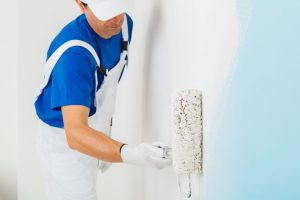
Why Walls Still Look Dull Even After Cleaning
Sometimes the wall gets cleaned, but the result doesn’t match the effort. The surface looks better for a moment, then goes back to the same flat, slightly tired look.
That usually happens because the change isn’t just on the surface.
Paint loses its finish over time. The smooth layer that reflects light evenly starts wearing down, especially in areas that see regular contact. Cleaning removes dust, but it doesn’t bring that finish back.
Some marks also settle deeper than expected. They don’t sit on top anymore. They blend into the paint layer, so wiping only lightens them, not removes them.
Moisture plays a role too. In certain rooms, the surface changes slowly without leaving obvious stains. The wall just stops looking fresh, even when it’s clean.
So the wall isn’t dirty. It’s just not the same surface it used to be.
How We Handle Wall Maintenance at Kaacib
Wall maintenance doesn’t begin with cleaning. It starts with understanding what changed on the surface and why.
In many homes we visit at Kaacib, walls are already being cleaned regularly. The issue isn’t neglect. It’s that certain areas have started reacting differently over time.
We usually check how the surface behaves under light. Some sections reflect evenly. Others appear slightly flat or patchy. That difference often points to wear rather than dirt.
Not every wall needs the same approach. In some cases, light cleaning is enough. In others, repeated wiping has already affected the finish, and further cleaning won’t improve how it looks.
The decision usually comes down to condition. Whether the surface can be restored with careful cleaning, or whether it needs a fresh coat to bring back uniformity.
The focus stays on keeping the result consistent, not just clean for the moment.
Keeping Walls in Good Condition Over Time
Walls don’t need constant attention. They just need to be noticed before small changes turn into permanent marks.
A few simple habits usually keep the surface from wearing out too quickly:
- Clean lightly, not aggressively
Gentle wiping removes dust without affecting the paint finish.
- Watch high-contact areas
Spots near switches, door frames, and furniture pick up marks faster than the rest.
- Keep moisture under control
Damp air changes how paint behaves, especially in closed or poorly ventilated rooms.
- Don’t let marks sit for too long
Fresh stains are easier to handle than ones that settle into the surface.
- Pay attention to how the wall looks over time
Uneven patches or dull areas usually show up before the surface needs repainting.
Most of this comes down to consistency. Small adjustments in how walls are maintained usually keep them looking the same for much longer.
Final Thoughts on Maintaining Painted Walls
Paint doesn’t fail all at once. It changes slowly, often in ways that are easy to overlook during daily use.
A wall can look clean and still feel uneven when light hits it from different angles. That usually comes from wear, not dirt.
From what we see at Kaacib, the difference often comes down to how early those changes are noticed. Light cleaning, handled the right way, keeps the surface stable. Repeated rough cleaning does the opposite.
Walls don’t need constant work. They just need the right kind of care before the surface starts changing permanently.