When Water Starts Leaving Marks That Don’t Go Away
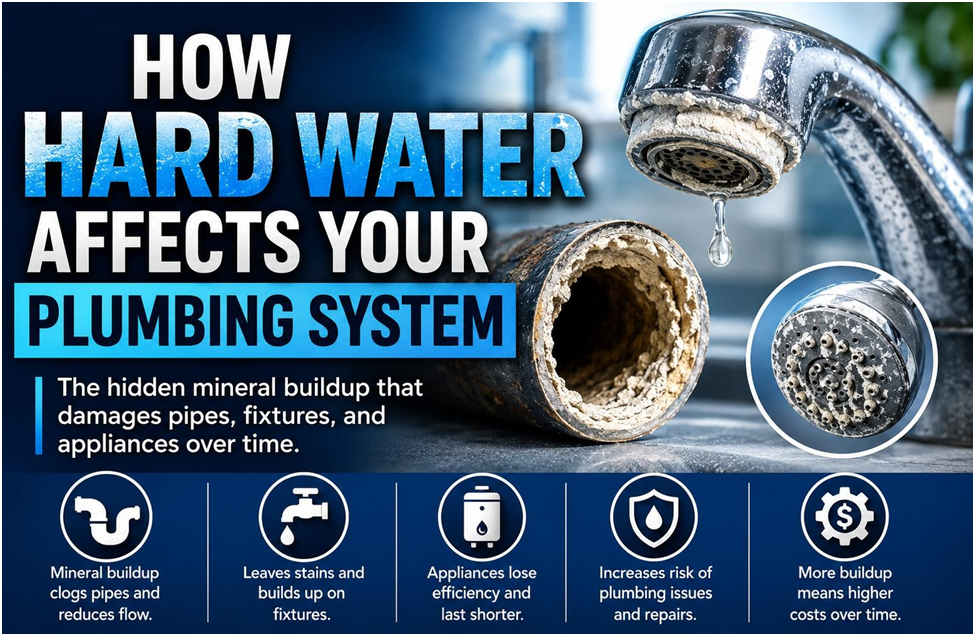
It usually begins with small things. White spots on taps, a dull layer on sinks, or glass that never looks fully clear after washing.
At first, it feels like a cleaning issue. You wipe it, it goes away, then comes back again in the same place.
Over time, the marks start building faster. Showerheads lose their shine. Faucets feel rough to the touch.
In some homes we visit at Kaacib, people notice it most on surfaces that stay in contact with
water daily. The residue doesn’t behave like normal dirt.
That’s usually the first sign that the water itself is carrying something that stays behind.
What’s Actually Present in Hard Water
Hard water isn’t dirty in the usual sense. It carries dissolved minerals that don’t leave with the water.
In most homes, these are the ones that keep showing up:
- Calcium deposits: The main reason for white residue on taps, tiles, and glass surfaces.
- Magnesium content: Adds to the buildup and makes surfaces feel slightly rough after drying.
- Mineral traces that stay behind after evaporation: Water dries, but these elements remain and start forming layers.
- Particles that react with soap and detergents: They reduce how well cleaning products work, leaving behind a film instead of a clean finish.
Accumulation that builds slowly inside pipes: What’s visible on the outside is only part of it. The same process continues within the plumbing system.
None of this causes immediate damage. It builds gradually, then starts affecting how surfaces and pipes behave over time.
How Mineral Buildup Starts Affecting Pipes and Fixtures
The change doesn’t begin inside the walls. It shows up first in the way water behaves at the surface.
Flow Starts Getting Restricted:
Showerheads and taps don’t release water the same way. Pressure drops slightly, or the flow spreads unevenly.
That usually means buildup has started collecting inside narrow openings.
Surfaces Stop Feeling Smooth:
Faucets, sinks, and fittings begin to feel rough. Even after cleaning, the surface doesn’t return to its original finish.
The layer keeps coming back because it’s forming from the water itself.
Appliances Begin Losing Efficiency:
Water heaters, washing machines, and similar systems take longer to do the same job. The internal parts start dealing with mineral layers that reduce heat transfer and flow.
Pipes Start Narrowing From the Inside:
This part isn’t visible, but it develops steadily.
Mineral deposits attach to pipe walls, reducing space for water to move freely. Nothing fails immediately. The system keeps working, just not as smoothly as before.
Where the Effects Show Up First Around the House
The early signs don’t appear everywhere at once. They show up in spots where water sits or passes through frequently.
Kitchen sinks usually reveal it early. Edges around the tap develop a chalky layer that returns soon after cleaning.
Bathroom fixtures follow the same pattern. Showerheads lose their even spray. Small openings begin to clog.
Glass surfaces make it more obvious. Marks stay behind after drying, even when the surface was cleaned properly.
Appliances also start reacting in subtle ways. Water heaters take longer. Washing machines don’t rinse as cleanly.
None of these feel like a major issue on their own. Together, they point to what’s building up inside the system.
How the Buildup Gradually Affects the System
It doesn’t show up as a sudden failure. The system keeps working, so the change feels minor at first.
Flow slows in small ways. Pressure feels slightly lower in certain taps. You adjust without thinking much about it.
Inside the pipes, layers keep forming. The space for water narrows bit by bit, especially in older lines.
Appliances begin taking longer to do the same job. Heating takes more time. Cleaning cycles don’t feel as effective.
Over time, the system starts working harder to maintain the same output. Nothing breaks immediately. It just stops performing the way it used to.
How We Deal With Hard Water Effects at Kaacib
We don’t treat hard water as a single issue. It shows up across different parts of the system, so the approach depends on where the buildup has settled.
The first step is checking how water is moving. Flow, pressure, and how fixtures behave usually point to where scaling has started.
In some cases, the issue stays limited to taps or showerheads. Cleaning and clearing those points restores normal flow.
Other times, the buildup sits deeper. Pipes, connections, or appliances start showing reduced
performance. That’s where a more detailed inspection becomes necessary. We focus on removing the effect before it spreads further into the system. You can explore how this is handled through our plumbing services.
The goal isn’t just to clear visible residue. It’s to bring the system back to how it should function under regular use.
Reducing the Impact of Hard Water at Home
Hard water doesn’t go away on its own, but a few habits can keep it from building up too quickly.
- Wipe surfaces before water dries: Minerals settle after evaporation, so drying taps and tiles early reduces visible residue.
- Clean fixtures regularly, not occasionally: Light buildup is easier to remove than layers that have been sitting for weeks.
- Pay attention to changes in flow: Slight drops in pressure often show up before clogging becomes noticeable.
- Keep an eye on appliances using water daily: Slower heating or weaker performance usually points to internal buildup.
- Don’t ignore early scaling around taps and joints: What shows on the surface often reflects what’s happening inside the system.
These steps don’t eliminate hard water. They just slow down how quickly it starts affecting the plumbing.
Final Thought on Hard Water and Plumbing
Hard water doesn’t damage everything at once. It builds slowly, then starts affecting different parts of the system in stages.
At first, it shows up on surfaces. Later, it begins influencing flow, pressure, and how appliances perform.
From what we see at Kaacib, the impact becomes noticeable only after buildup has been there for some time. Acting early usually keeps the system from reaching that point.
The water itself doesn’t change. The difference comes from how long its effects are allowed to build.