The bathroom is not the dirtiest room in most homes. The light switch beside the bathroom door probably is.
A toilet seat gets cleaned daily in most households. In the same household, the light switch outside the bathroom is touched by every person who uses the room, multiple times a day, and cleaned perhaps once a month. The contamination profile of these two surfaces is not what most people assume, and the gap between them is not small.
Visual cleanliness is a useful measure. It tells you whether a surface has visible dirt, grease, or residue. What it doesn’t tell you is how many hands have touched that surface since it was last disinfected, or what those hands were doing before they touched it. A kitchen counter wiped after cooking looks clean. The tap handle turned on to wash those same hands may not have been disinfected in weeks.
The surfaces that carry the most contamination risk in a home or office are almost never the ones that look dirty. They’re the ones that see the most contact and the least deliberate disinfection.
What Makes a Surface a Hotspot
A germ hotspot isn’t defined by how it looks or where it sits in a room. It’s defined by two numbers: how often it gets touched, and how often it gets disinfected. The gap between those two numbers is the contamination risk.
A surface touched twice a day and wiped daily carries a very different risk profile from a surface touched fifty times a day and wiped weekly. The second surface may look identical to the first. In a freshly cleaned room, both surfaces appear clean. One is. One isn’t, or won’t be for long.
This is why the surfaces that generate the most contamination concern among hygiene professionals are rarely the ones that trigger concern among residents. The toilet gets attention because it looks like it needs it. The door handle to the bathroom gets used by every person who enters, potentially after touching the same surfaces the toilet cleaner was addressing, and receives a fraction of the same attention.
The areas missed during routine cleaning create one kind of problem, the dust on top of the wardrobe, the grease on the exhaust hood, the mold in the bathroom ceiling corner. That problem is covered in detail when looking at the areas most homes forget to clean. The problem here is different. These surfaces aren’t being missed because they’re hard to reach or outside the sightline. They’re being undercleaned because they look clean, and looking clean is the only criterion most cleaning routines apply.
The Home’s Highest-Contact Surfaces
Some surfaces in a home are touched before anything else in the morning and after everything else at night. They are touched by every member of the household, usually without a second thought, and cleaned on a schedule that bears no relationship to how often they are used.
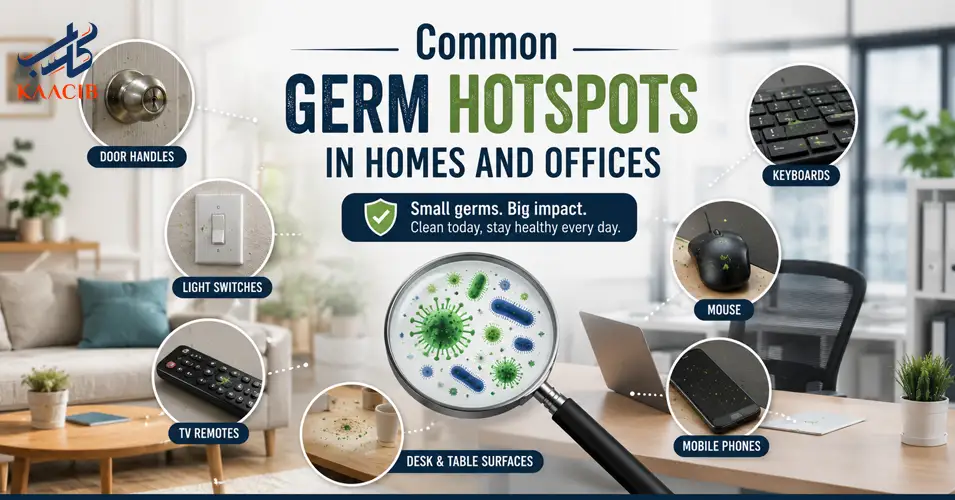
Light switches. A light switch in a main hallway or bedroom is touched multiple times daily by every person in the home. In a household with several family members, the same switch accumulates contact from dozens of hand interactions before it sees any cleaning. It is a flat, non-porous surface that holds transferred contamination from every hand that operates it. In extended family households common in Karachi, the contact frequency on shared switches is higher still.
Door handles and knobs. Interior door handles are touched every time a room is entered or exited. A handle on a kitchen door, a bathroom door, or a main entrance accumulates contact from the full household across the full day. Hands touching a door handle carry whatever they were last in contact with. The handle itself is rarely wiped between uses or included in daily surface cleaning.
Remote controls. A television remote sits on a sofa or side table and is picked up, put down, and passed between household members throughout the evening. It goes from hand to hand without any intermediate cleaning, often while people are eating or have recently handled food. The surface between the buttons collects debris and contamination from every interaction. Remotes are among the most consistently overlooked surfaces in a home cleaning routine.
Mobile phones. A phone accompanies its user through every environment in the day: the kitchen, the bathroom, the office, public transport, and back again. It sits against the face, rests on multiple surfaces, and is picked up and set down dozens of times. The screen and case transfer contamination in both directions, from hand to phone and from phone to hand, every time the device is used. Most phones are cleaned rarely, if at all.
Bathroom tap handles. The tap handle is turned on with hands that prompted the washing in the first place. In most handwashing routines, the tap is turned off with cleaner hands than those that turned it on, but the handle itself retains what the first contact left. In households where the same bathroom is shared by several people, the tap handle is among the highest-contact surfaces in the room.
In a Shared Office, the Risk Compounds
The office kitchen at nine in the morning sees a procession of people. The kettle gets switched on and off. The water dispenser tap is pressed repeatedly. The refrigerator door opens and closes. Within an hour, every shared surface in that kitchen has been touched by a significant portion of the office, and none of it will be cleaned until the next scheduled janitorial visit.
The water dispenser tap handle. In a Pakistani office, the water dispenser is the primary hydration point for the entire team. The tap handle is pressed dozens of times daily by people arriving from their desks, from outside, from the bathroom. No surface in the average office sees more hand contact per square centimeter. Standard janitorial cleaning typically wipes the top of the dispenser and the drip tray. The tap handle is touched constantly and disinfected almost never.
Shared printer and photocopier controls. A shared printer in an open office is used by different staff throughout the day. The touchscreen panel or button controls receive contact from every person who collects a print job, and the surface is rarely wiped between uses. In offices where the same machine handles printing for an entire floor, the contact frequency on those controls rivals the dispenser handle.
Elevator buttons. For offices in multi-story buildings, elevator buttons represent among the highest-contact surfaces in the entire building. A single button in a busy office building is pressed by hundreds of people across a working day, from different floors, different environments, and different hygiene contexts. Standard building cleaning addresses elevator interiors periodically. The buttons themselves receive a fraction of the disinfection their contact frequency warrants.
Desk phones in shared spaces. In offices where desk phones are used by more than one person, either in shared workstations or as reception and meeting room units, the handset and keypad accumulate contact from multiple users with no intermediate cleaning. The mouthpiece sits against lips and breath. The earpiece sits against the ear. The keypad is pressed with fingers that have been across a keyboard, a mouse, and shared office surfaces since they were last washed.
The Kitchen’s Hidden Contamination Points
The contamination risk in a kitchen doesn’t come only from what’s left on surfaces after cooking. It comes from what moves between surfaces during preparation, carried by hands, utensils, and tools that contact raw food and then contact everything else in reach.
The kitchen sponge. A sponge used to wipe counters after food preparation absorbs whatever was on those surfaces. Its structure, porous and constantly damp, creates ideal conditions for rapid microbial growth. The same sponge used to wipe a counter after raw meat preparation and then used to wash a utensil carries contamination between those two tasks. Sponges are replaced infrequently in most households and rarely disinfected between uses despite being one of the highest-contact items in the kitchen.
Cutting boards. A cutting board used for both raw protein and vegetables without intermediate cleaning between tasks transfers contamination directly from one food to another. The surface score marks that develop from regular knife use create channels that are difficult to clean effectively and where microbial growth persists after surface washing. In households with one primary cutting board, the surface sees the widest range of food contact of any item in the kitchen.
The refrigerator handle. The refrigerator is opened repeatedly during meal preparation, often with hands that have been handling raw ingredients. The handle accumulates this contact throughout cooking and is rarely wiped as part of the preparation process. A handle touched after handling raw chicken and before washing hands carries that contamination to the next person who opens the refrigerator, regardless of how clean the refrigerator interior appears.
The kitchen tap handle. The kitchen tap is turned on after handling raw food, during food preparation, and throughout cleaning. Like the bathroom tap, it is turned on with the hands that prompted the washing. In a busy kitchen where the tap is used repeatedly across a cooking session, the handle accumulates contact from multiple stages of food preparation between any cleaning that specifically addresses it.
Why Cleaning Schedules Miss Them
Cleaning schedules are built around visibility. Floors get swept and mopped because they visibly collect dirt. Bathrooms get scrubbed because they visibly accumulate residue and odor. Kitchen surfaces get wiped because they visibly show grease, spills, and food debris. The logic is sound. The problem is what it excludes.
A light switch doesn’t look dirty after fifty contacts. A door handle doesn’t show the accumulation of a hundred handshakes the way a counter shows a cooking spill. Remote controls and water dispenser taps don’t signal that they need attention. They look clean because contamination transferred through touch doesn’t leave a visible mark. So they stay out of the daily routine, appearing in a deep clean schedule that runs monthly or quarterly while their contact frequency runs hourly.
The gap between those two timelines is where the contamination accumulates. A surface disinfected once a month and touched fifty times a day has been recontaminated thousands of times before the next scheduled cleaning reaches it. The cleaning happened. The surface spent almost none of the intervening month clean.
For offices, the gap is wider. Janitorial schedules address floors, bins, and visible surfaces. The water dispenser handle, the printer controls, the elevator buttons. Surfaces like these sit outside the standard cleaning scope not because anyone decided they were unimportant but because the schedule was built around what the eye reports, and the eye reports them as clean.
How We Handle High-Touch Areas During Cleaning at Kaacib
Standard cleaning and high-touch surface disinfection are different tasks, and treating them as the same job produces a clean-looking space that hasn’t addressed where the actual contamination risk sits.
When Kaacib’s cleaning team works through a home or office, high-touch surfaces run on a separate protocol from general surface cleaning. The floor gets mopped. The counters get wiped. Those tasks happen on their own schedule and with their own materials. The light switches, door handles, tap handles, appliance controls, and shared equipment surfaces get addressed with a disinfection step that the standard wipe-down doesn’t include. The distinction matters because the same cloth used to wipe a counter doesn’t disinfect a light switch. The task looks the same. The outcome is different.
In office environments, the protocol extends to the surfaces that standard janitorial work typically doesn’t reach: water dispenser handles, printer controls, meeting room equipment, and elevator buttons where access is available. These surfaces are mapped at the start of a job rather than addressed if noticed. Contact frequency determines the priority, not appearance.
The frequency of the high-touch protocol is also set differently from the general clean. A surface touched constantly needs to be addressed more often than a floor that sees foot traffic. Kaacib’s professional cleaning in Karachi builds both schedules into the same service plan, so the visible surfaces and the high-contact surfaces are both addressed at the frequency their use actually warrants.
Why Clean-Looking Spaces Aren’t Always Clean
A room that has just been cleaned passes every visual test. The floor is clear. The surfaces are wiped. There is no visible dirt, no odor, nothing that signals a problem. The space looks clean because the tasks the cleaning routine was built around have been completed.
The light switch by the door has been touched fourteen times since the cleaner left.
Visual cleanliness and hygiene safety overlap significantly but not completely. The overlap covers everything that looks dirty and is dirty. What falls outside it are the surfaces that are contaminated without looking contaminated, the ones that receive constant contact and infrequent disinfection, and the ones that recontaminate within hours of being cleaned because their use frequency makes any cleaned state temporary.
This isn’t an argument for cleaning more. It’s an argument for cleaning differently, for distinguishing between the surfaces that need to look clean and the surfaces that need to be clean, and building a routine that addresses both on schedules that match how each surface is actually used.
A spotless room with a contaminated light switch, tap handle, and water dispenser is cleaner than it was. It isn’t as clean as it looks.