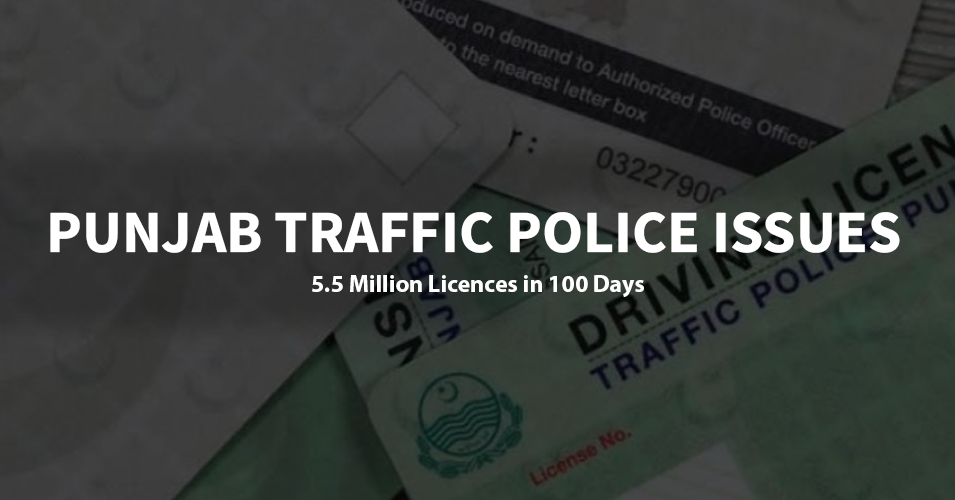
Punjab Traffic Police Issues 5.5 Million Licences in 100 Days
The Punjab Traffic Police has revealed that it issued more than 5.5 million driving licences within just 100 days—an achievement officials describe as a significant step toward improving legal compliance and road management across the province.
Authorities say the initiative is part of a broader modernization effort aimed at digitizing services, reducing backlogs, and making the licensing process faster and more accessible for citizens. With increasing urban traffic and rising vehicle ownership, expanding the number of licensed drivers has become a key priority.
Efficiency vs. Safety Debate
While the announcement has been praised as a record-breaking administrative success, it has also sparked debate among the public. Critics question whether such a high volume of licences issued in a short timeframe could compromise the quality of driver assessments.
Concerns mainly revolve around whether proper driving tests, road sense evaluation, and theoretical knowledge checks are being strictly enforced. Road safety experts often highlight that weak testing standards can lead to higher accident rates, especially in densely populated cities like Lahore.
Official Response and Clarification
In response to criticism, the Punjab Traffic Police has firmly stated that the licensing process remains strictly merit-based. According to officials, no applicant is granted a licence without passing all required tests, including practical driving exams and knowledge assessments.
They also emphasized the role of government-run driving schools, where trained instructors provide structured lessons. These centers are designed to improve driving skills, awareness of traffic laws, and responsible road behavior—an area that has historically been overlooked in Pakistan.
Broader Context: Why This Matters
Pakistan has long struggled with a large number of unlicensed drivers, which contributes significantly to traffic violations and road accidents. By increasing access to licences and formal training, authorities aim to bring more drivers into the regulated system.
Additionally, recent crackdowns and stricter enforcement campaigns have pushed more citizens to obtain valid licences. Digital systems and online appointment booking have also played a role in speeding up the process.
The Road Ahead
While the milestone is impressive, experts suggest that maintaining transparency and ensuring consistent testing standards will be critical. Simply increasing the number of licensed drivers is not enough—improving driver behavior, enforcing traffic laws, and investing in road safety education are equally important.
The coming months will determine whether this rapid expansion translates into safer roads or raises further concerns about enforcement quality.