2026
2026

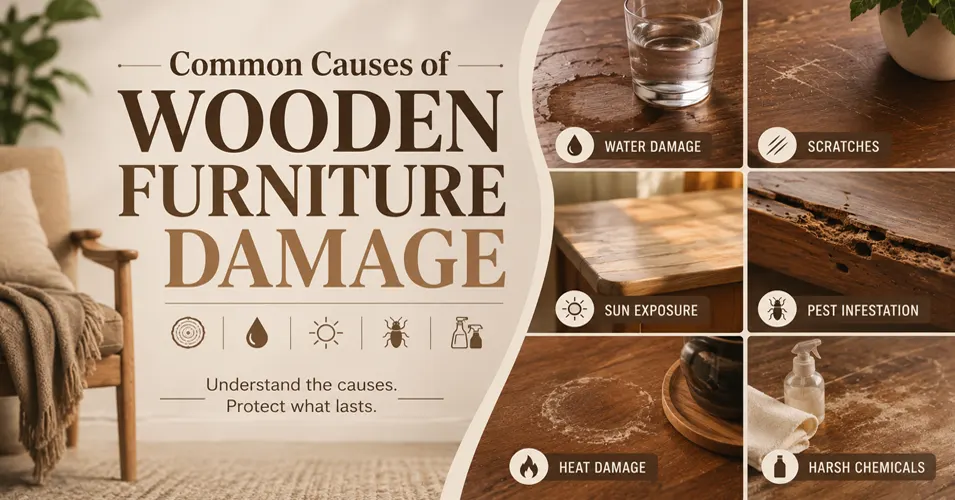
When wooden furniture cracks or warps, the first assumption is almost always that the piece was poorly made. The joint that loosened after two years, the drawer that stopped closing flush, the tabletop that developed a ridge down its center. These feel like evidence of a bad purchase.
In most cases they aren’t.
Wood keeps responding to its surroundings long after the workshop. It takes on moisture when the air is humid and releases it when the air dries, swelling slightly in one direction and contracting in another. A piece that sits in a climate-controlled showroom behaves very differently from the same piece installed in a Karachi home, where coastal humidity, daily AC cycles, and year-round sun through glass create conditions that shift multiple times before the end of any given day.
The furniture isn’t failing. It’s reacting. And what it’s reacting to determines what the damage means and what, if anything, can stop it from continuing.
What Wood Is Actually Doing Inside Your Home
Wood retains the cellular structure it had as a living tree. Those cells absorb moisture from the surrounding air when humidity is high and release it when the air dries. The material expands as it absorbs and contracts as it releases. This isn’t a defect or a sign of inferior quality. It’s the nature of the material regardless of price or craftsmanship.
In a stable indoor environment where temperature and humidity stay relatively constant, this movement is minimal. The wood reaches a balance with its surroundings and stays there. In environments where conditions shift regularly, the AC running through the day, windows open in the evening, monsoon humidity arriving over weeks before receding, the wood is adjusting continuously. Each cycle of swelling and contraction places stress on joints, finishes, and the fibers within the wood itself.
This is why two identical pieces of furniture, bought from the same place on the same day, can behave differently in two different rooms of the same home. The room that faces west and gets afternoon sun runs warmer and drier. The piece in that room contracts more aggressively each afternoon. The room with the AC vent blowing directly onto a wardrobe cycles between cold dry air when the unit runs and rising humidity when it stops. Each room is a different environment, and the wood in each one responds to different conditions.
What Karachi Does to Wood Every Day
Three conditions in the average Karachi home account for most of the furniture damage that gets blamed on quality. They don’t announce themselves. They work quietly across months, and by the time something is visibly wrong, the process has usually been running for a long time.
Humidity that comes and goes. Summer humidity in Karachi regularly runs between 60 and 80 percent outdoors. Open a window and that air enters the room. Run the AC and indoor humidity drops. Turn it off and the humidity climbs again. During load-shedding, the cycle can reverse multiple times in a single evening. The wood in a wardrobe or table sitting through this absorbs moisture and swells, then dries and contracts, then swells again. The joint that was tight in March has been through hundreds of these cycles by August. The stress doesn’t look like anything at first. It accumulates.
A vent blowing directly onto the surface. Cold air from an AC vent dries the outer surface of wood faster than the interior can match. The surface wants to contract; the core hasn’t dried enough to follow at the same rate. That tension runs through the piece in opposing directions. The finish is the first to give. Then the surface fibers. Furniture directly below or in front of a vent is almost always the first piece in a room to show cracking or peeling, regardless of how well it was made.
Afternoon sun through a window. The light feels pleasant. The room doesn’t seem particularly hot. What’s happening to a wooden surface under sustained UV exposure at peak afternoon heat is invisible until it isn’t. The finish bleaches and fades unevenly, lighter where the sun hits and darker where it doesn’t. Underneath, the surface fibers are contracting from the heat and losing the moisture that kept them flexible. The finish eventually lifts from below rather than from the surface, and peeling that looks sudden has usually been building for several months.
The Joint Goes Before the Surface Does
Damage doesn’t appear evenly across a piece. Wood gives way at the points that carry the most stress or have the least protection, and those points follow a sequence that a carpenter recognizes immediately.
The joints go first. A wardrobe door that no longer sits flush, a chair leg that has developed a slight give, a cabinet drawer that pulls out at a slight angle. All of these are the glue bond responding to repeated swelling and contraction. The adhesive was designed for a stable join under ordinary movement. Sustained cycling wears at the bond gradually, and the loosening happens slowly enough that it often goes unnoticed until the gap is already visible.
After the joints, the finish. Lifting along the edges of a flat surface, small bubbles appearing where the finish once lay flat, a clouded or milky appearance in areas that were clear. The wood beneath is still moving; the finish is rigid and can’t follow. Eventually the adhesion breaks at its weakest point and the separation spreads outward from there.
Last is the wood itself. A crack running along the grain. A tabletop that bows slightly across its width. A panel that no longer sits level. When the damage reaches this stage, it has moved through the finish, through the surface fibers, and into the structure of the piece. It is no longer a surface repair.
The Decision Made Once, Paid for Over Years
Where a piece of furniture sits in a room determines which of these conditions it faces most directly, and at what intensity. Most placement decisions are made once, when the furniture arrives, and rarely revisited. The damage that develops over the following years traces back to that initial decision in nearly every case.
Furniture positioned directly below or in front of an AC vent receives the most concentrated version of the airflow problem. The cold dry air hits the same surface continuously, every time the unit runs. Shifting the piece even two feet to the side removes it from the direct airflow path while keeping the room at the same temperature. The difference in outcome over two or three years is considerable.
Pieces against external walls face a different exposure. In Karachi’s older construction, external walls absorb heat through the day and release it inward through the evening. A wardrobe pressed flush against an external west-facing wall sits in contact with a surface that fluctuates in temperature across twenty-four hours. The back panel, almost always the thinnest and least finished part of the piece, takes the most stress from that contact.
Furniture receiving direct afternoon sun is the most straightforward case and the most consistently underestimated. The light feels comfortable. The room doesn’t feel particularly hot. The damage to the finish and surface fibers doesn’t register until it’s already months in.
When placement-related damage has moved past the surface and into the joints or structure, the assessment involves more than refinishing. Understanding the structural problems that develop in wooden furniture and fixtures helps distinguish between what a surface repair addresses and what requires work on the joints and frame.
How We Evaluate Furniture Condition at Kaacib
The first question when a piece comes in for assessment isn’t what the damage looks like. It’s where the piece has been sitting.
A finish that has peeled from the surface is a different problem from a joint that has worked loose from repeated moisture movement. Treating one as though it were the other produces a repair that holds for a season before the underlying cause asserts itself again. The surface can look correct while the joint continues moving; eventually the repair fails in the same place.
Wood type changes the conversation as well. Sheesham, which is the most common solid wood in Pakistani homes, tolerates humidity cycling far better than MDF or chipboard construction. A Sheesham wardrobe with a loose joint is usually repairable. A laminate cabinet whose core has begun swelling and separating from the surface is a different situation. Cosmetic work can be done, but the structure underneath doesn’t recover.
Kaacib’s furniture condition assessment in Karachi covers both layers: the visible damage and the environmental cause behind it, identifying what the repair requires and whether the placement needs to change for it to hold.
When the Accumulation Finally Shows
A piece of furniture placed in the wrong position on the day it arrives doesn’t show damage that day. The joint holds. The finish looks clean. Nothing indicates that the conditions are working against it.
The response accumulates invisibly. Each humidity cycle adds a small increment of stress to the joint. Each afternoon of direct sun lifts the finish adhesion by a fraction. Each session of cold AC airflow pulls a little more moisture from the surface fibers than the interior can immediately replace. None of these individual cycles produces visible damage. The accumulation of hundreds of them does.
This is why wooden furniture often seems to deteriorate suddenly. A crack that wasn’t there last month. A door that closed perfectly for three years and now doesn’t close at all. A surface that begins peeling across a wide area without any obvious trigger. The trigger was the day the piece was placed. What appeared was the point at which accumulated stress exceeded the material’s tolerance.
Catching the earlier signs, the slight resistance in a drawer that used to glide, the faint clouding in a finish that used to be clear, creates the option of a contained repair. Left past that point, the repair becomes a restoration. Left further still, it becomes a replacement.