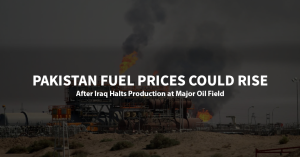

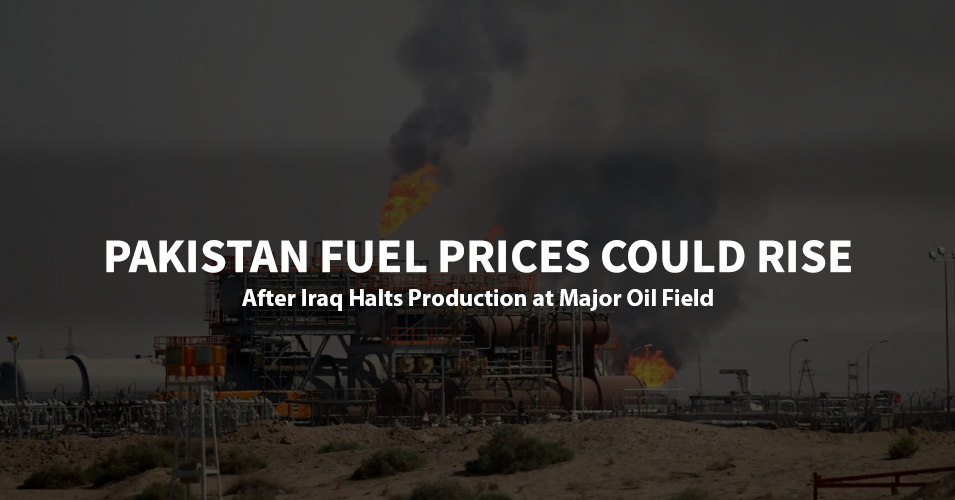
Global oil markets are facing renewed uncertainty after Iraq halted production at its largest oil field, Rumaila Oil Field, following regional tensions and security threats linked to Iran. The shutdown has raised concerns about potential fuel price increases in countries heavily dependent on imported oil, including Pakistan.
The Rumaila oil field normally produces around 1.5 million barrels of oil per day, accounting for nearly 36% of Iraq’s total crude output. With operations paused, a significant portion of global supply has been temporarily removed from the market, putting upward pressure on oil prices.
Adding to the disruption, Iraq has also halted crude shipments through the Kirkuk–Ceyhan Oil Pipeline, which transports northern Iraqi oil to Turkey’s Mediterranean port of Ceyhan. This route typically carries up to 1.2 million barrels per day and provides an alternative export channel that partially avoids the sensitive Strait of Hormuz.
The Strait of Hormuz is one of the world’s most critical oil shipping corridors, through which roughly one-fifth of global oil supply passes daily. Any disruption in this region can quickly ripple through international energy markets, tightening supply and pushing prices higher.
According to reports from Reuters, Iraq has already reduced production by nearly 1.5 million barrels per day due to the security situation and tanker movement challenges at southern export terminals. Officials warn that production cuts could deepen if shipping traffic through the Strait of Hormuz remains restricted and storage facilities at ports reach capacity.
The uncertainty has already affected global oil benchmarks, with Brent Crude climbing above $80 per barrel. Analysts say geopolitical tensions often add a “war premium” to oil prices, meaning markets quickly react to supply threats even before actual shortages occur.
Possible Impact on Pakistan
For Pakistan, where fuel prices are closely linked to international oil markets, prolonged disruptions could lead to higher domestic petrol and diesel prices in upcoming review cycles.
Currently, according to market trackers, petrol is priced at Rs. 266.17 per litre, while high-speed diesel stands at Rs. 280.86 per litre as of March 1, 2026. However, Pakistan’s fuel pricing mechanism depends on several factors beyond crude prices, including shipping costs, insurance premiums, exchange rates, and government taxes.
If tensions in the Gulf persist and tanker availability remains tight, freight and insurance costs for oil shipments could rise significantly. This would increase the overall cost of importing fuel to Pakistan, potentially pushing pump prices upward.
Higher fuel costs could also affect transportation, logistics, and industrial sectors across the country. Rising diesel prices often translate into higher freight charges, which may eventually increase the cost of goods and services for consumers.
What Comes Next
Energy markets are closely watching whether Iraq can safely restore operations at the Rumaila oil field and resume exports through the Ceyhan pipeline. Any improvement in tanker access or easing tensions around the Strait of Hormuz could stabilize global supply and reduce price pressure.
Until then, countries dependent on imported fuel, including Pakistan, may remain vulnerable to sudden price swings in the global oil market.