

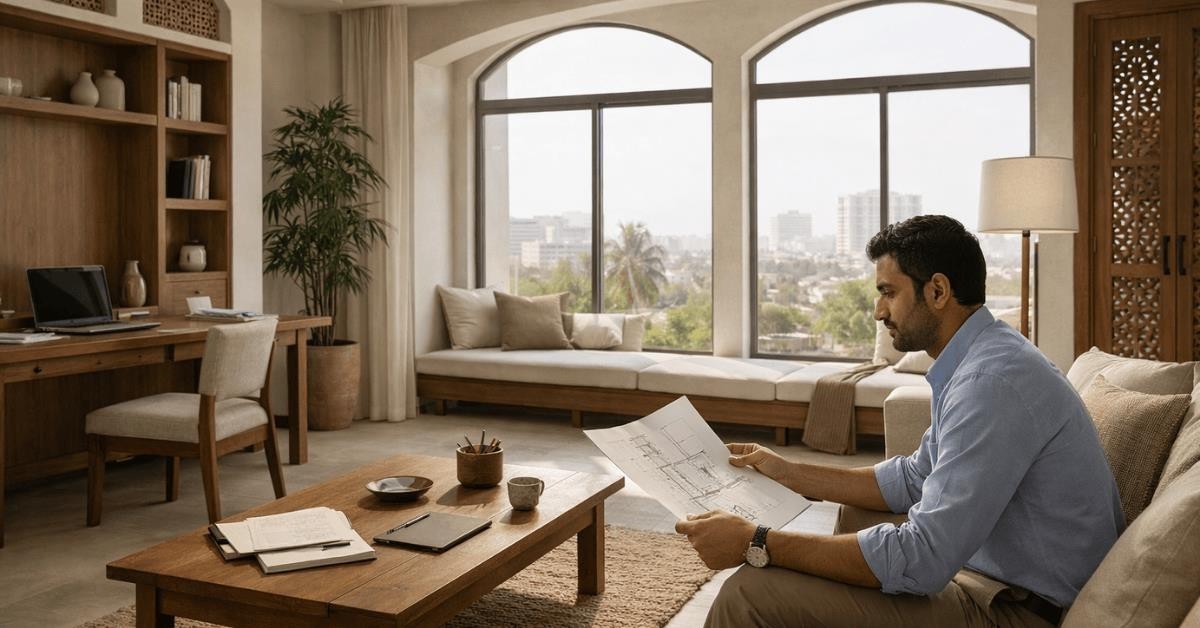
Trends, Timing, and How to Choose the Right Professional
People usually start looking for an interior designer in Karachi when something feels unresolved. A home feels cluttered despite having space, an office stops supporting the way people work, or a renovation keeps getting delayed because no one is sure where to begin. The search is rarely about style at first. It’s about uncertainty.
This question often comes up after people have already spent time understanding interior design planning in Karachi, yet still feel unsure about how to proceed. Something needs to change, but it isn’t clear whether that change requires a designer, a contractor, or simply better planning.
This page exists to slow that moment down. Not to sell an answer, but to help you think clearly before you make a decision that affects your space for years
Understanding Interior Design Trends in Karachi Before Making Decisions:
Interior design trends in Karachi tend to arrive quietly. They don’t usually announce themselves as trends. They show up as small shifts in how spaces are being used. Homes start favoring calmer layouts. Offices move away from rigid partitions. Restaurants focus more on flow than decoration.
What’s important to understand is that trends are not instructions. They reflect changing lifestyles, not universal solutions. A layout that works well in a newly built apartment may fail completely in an older house. A design that looks impressive online might feel impractical after daily use.
Many people assume trends are about colors, finishes, or furniture styles. In reality, the more meaningful trends are about behavior. How people move through a space. How much storage they actually need. How lighting affects comfort during long hours indoors. These shifts matter far more than surface-level choices.
The mistake happens when trends are followed without context. Global ideas don’t always translate cleanly into Karachi’s climate, building structures, or daily routines. That’s why trends should inform thinking, not replace it. They’re useful when they help you ask better questions, not when they dictate answers.
At this stage, the role of an interior designer isn’t to impose trends. It’s to help interpret them in a way that makes sense for how you actually live or work.
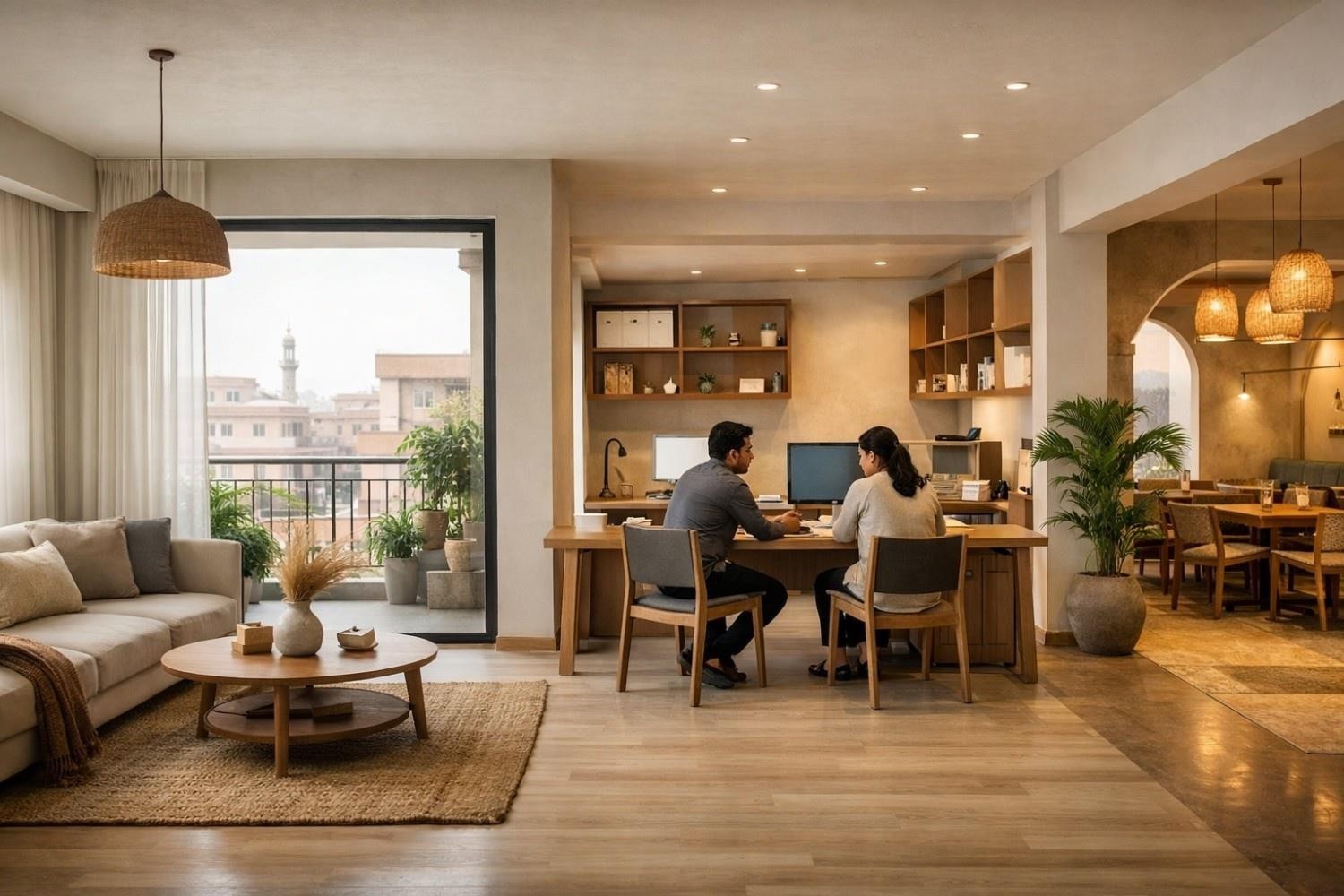
What People Really Mean When Looking for an Interior Designer in Karachi:
When someone searches for an interior designer in Karachi, they’re usually not looking for a title or a label. They’re trying to solve a problem they can’t quite define yet. The space feels wrong, inefficient, or unfinished, but the cause isn’t obvious.
Most people don’t wake up thinking, I need interior design. They think about discomfort, wasted space, confusion, or decisions piling up without resolution. The search term is just the closest phrase they can find.
Confusion Between Design and Execution:
One of the most common misunderstandings is assuming that design and execution are the same thing. They’re not.
Design is about thinking before building. Execution is about carrying out those decisions. Many people approach a designer when what they actually need first is clarity, not construction. Others assume a designer will simply decorate, when in reality the work often begins with layout, planning, and problem-solving.
This confusion leads to frustration on both sides. Expectations don’t align, and conversations stay vague longer than they should.
Wanting Certainty, Not Style:
Despite how it looks online, most people aren’t chasing a specific style. They’re looking for reassurance. They want to know:
- if their budget makes sense for what they want to achieve
- whether their space can realistically be improved
- what decisions matter now, and what can wait
Style comes later. Certainty comes first.
That’s why many initial conversations with designers feel scattered. People talk about colors and furniture because those are easy to describe. The real concerns, like long-term comfort or daily usability, take longer to surface.
Why Expectations Often Don’t Match Reality:
Another reason people struggle early on is because interior design looks simpler from the outside. Photos make everything appear resolved. What they don’t show are the constraints, trade-offs, and revisions behind each decision.
An experienced interior designer in Karachi doesn’t just respond to preferences. They interpret limitations. Budget, structure, timelines, and usage all shape what’s possible. When those factors aren’t discussed openly, disappointment becomes likely.
This stage is where clarity matters most. Not about what looks good, but about what actually works for the space and the people using it.
How to Choose an Interior Designer in Karachi Without Guesswork:
Choosing an interior designer in Karachi rarely happens in a straight line. Most people don’t sit down with a checklist and work through it logically. They talk to a few people, look at portfolios, hear recommendations, and still feel unsure. That hesitation is normal. The decision isn’t just about taste. It’s about trust.
What helps is not trying to find the right designer immediately, but understanding how to read the signals that matter.
Looking at Portfolios Without Getting Distracted:
Portfolios are usually the first thing people react to, and often the most misleading. Strong visuals can create instant confidence, but they don’t always explain how those results were achieved.
Instead of asking whether you like what you see, it helps to ask quieter questions:
- Do the projects look similar, or do they respond to different spaces?
- Can you sense planning behind the visuals, or just surface styling?
- Is there evidence of problem-solving, not just decoration?
A good portfolio doesn’t shout. It explains itself slowly, if you know what to look for.
Paying Attention to How Designers Talk, Not Just What They Show:
Early conversations reveal more than finished images ever can. Some designers focus heavily on outcomes. Others talk about process. Neither is wrong, but the balance matters.
When someone explains why they suggest a certain layout, or how they usually approach constraints, it shows thinking beyond aesthetics. Vague assurances can sound reassuring at first, but clarity tends to feel calmer, even when it introduces limitations.
Silence also matters. Designers who pause to understand your space, your routine, or your concerns are usually reading more than they’re presenting.
Understanding the Difference Between Confidence and Fit:
It’s easy to assume that the most confident voice is the safest choice. Sometimes it is. Often, it isn’t.
Confidence should feel grounded, not rushed. A designer who acknowledges trade-offs, uncertainties, or the need to explore options is usually being honest. One who claims certainty too early may be skipping important steps.
The right interior designer in Karachi isn’t the one with the strongest pitch. It’s the one whose thinking aligns with how you want decisions to be made.
Letting the Process Matter More Than the Promise:
Many problems in interior projects don’t come from bad intentions. They come from unclear processes. When timelines, responsibilities, or boundaries aren’t discussed early, confusion fills the gaps.
It’s worth paying attention to how a designer describes their process:
- How do decisions usually unfold?
- At what point are changes still manageable?
- What happens when something doesn’t go as planned?
These answers don’t need to be perfect. They just need to be honest.
Choosing well isn’t about avoiding risk completely. It’s about choosing someone who understands it and works with it carefully.

When to Hire an Interior Designer and What to Prepare:
Timing is where most interior projects quietly succeed or fall apart. Not because people choose the wrong moment, but because they don’t realize how much that moment shapes everything that follows.
Many people reach out to an interior designer in Karachi when construction is about to start, or worse, already underway. Walls are marked, budgets feel tight, and decisions need answers fast. At that stage, design turns reactive. It becomes about fixing instead of shaping.
The earlier conversation usually feels less urgent, but it carries more weight.
Early Conversations Save More Than Time:
Talking to a designer early doesn’t mean committing early. It means thinking early. Even a short discussion before major decisions are locked can change the direction of a project.
At that stage, questions are simpler:
- What is realistically possible in this space?
- What should be decided now, and what can wait?
- Where do people usually overspend or compromise without noticing?
These conversations don’t demand certainty. They create it gradually.
Preparation Is About Clarity, Not Perfection:
People often delay reaching out because they feel unprepared. They think they need final measurements, firm budgets, or clear style preferences. In reality, what helps most is something quieter.
It helps to know how the space is used today. What feels inconvenient. What works, even if it looks dated. What you don’t want repeated.
A rough budget range is useful, but flexibility matters more than precision. Priorities matter more than numbers. The clearer you are about how you live or work, the easier it becomes for a designer to respond meaningfully.
Why Late Decisions Feel More Expensive:
When design enters late, options shrink. Materials are chosen to fit timelines. Layouts adjust to what’s already built. Changes feel costly because they are.
This is where frustration usually shows up. Not because the designer failed, but because the space never had the chance to be thought through properly.
Hiring an interior designer earlier doesn’t guarantee fewer problems. It usually results in better problems. Ones that are easier to solve, easier to discuss, and less stressful to live with.
Letting the Process Breathe:
Interior design works best when it has room to breathe. Not rushed, not frozen, just paced. Good timing creates that space.
The decision to involve a designer isn’t about readiness in the technical sense. It’s about readiness to think things through instead of reacting later. That shift alone often changes the entire experience.
Making Interior Design Decisions with Long-Term Thinking:
Most interior design decisions don’t fail immediately. They fail slowly. A layout that felt fine at first becomes awkward with daily use. Materials that looked good begin to feel demanding. Storage that seemed sufficient quietly fills up. These issues aren’t dramatic, but they accumulate.
That’s why long-term thinking matters more than enthusiasm at the start. Decisions made in a rush often solve the present moment but ignore what comes next. Living patterns change. Work routines shift. Families grow or adapt. Spaces need to absorb those changes without constant correction.
An interior designer in Karachi adds value when they help slow the process down just enough to see beyond the initial outcome. Not to overthink, but to anticipate. Good planning doesn’t eliminate compromise. It makes compromise intentional.
This is where experience shows. Not in bold ideas, but in small adjustments that prevent larger problems later. When design choices are grounded in how a space will actually be used, comfort lasts longer, maintenance feels lighter, and the space grows with you instead of working against you.
At Kaacib, this way of thinking shapes how interior design decisions are approached. The focus stays on planning with purpose, not chasing perfection. Over time, that mindset tends to make the biggest difference.
FAQ — What to Know Before Working With an Interior Designer in Karachi:-
Q1: How much does an interior designer usually cost in Karachi?
Costs vary widely by experience, scope, and execution level, so early estimates should be treated as indicative rather than final.
Q2: How long will a typical interior design project take?
Small spaces may take weeks, while full homes often require months of planning and execution, commonly within a 3–6 month window.
Q3: What should I ask during the first consultation?
Ask about workflow, budget handling, change management, site supervision, and examples of similar problems they’ve solved.
Q4: Do I need a detailed budget before talking to a designer?
No, a rough budget range and clear priorities are enough to start meaningful discussions.
Q5: Should I talk to a designer before construction begins?
Yes, early input can prevent costly layout mistakes and reduce last-minute compromises.
Q6: What are common mistakes people make when hiring a designer?
Common errors include unclear briefs, ignoring process, chasing trends, and underestimating long-term maintenance costs.
Q7: How do I tell a good portfolio from a staged one?
Strong portfolios show variety, context, and problem-solving, not just repeated finishes and styling.
Q8: Can I work with a designer if I’m not local to Karachi?
Yes, many designers work remotely for design and coordination, but local site supervision should be clearly defined.
Q9: How do designers usually charge?
Designers may charge fixed fees, hourly rates, or percentages, so clarify what revisions and site visits include.
Q10: What documents should I expect after a design brief?
Expect a scope summary, mood boards, timeline, and estimates first, followed by detailed drawings and schedules if the project proceeds.
For those who decide they need structured guidance rather than trial and error, working with professional interior design services in Karachi can help bring clarity to planning without rushing decisions or overcommitting too early.