
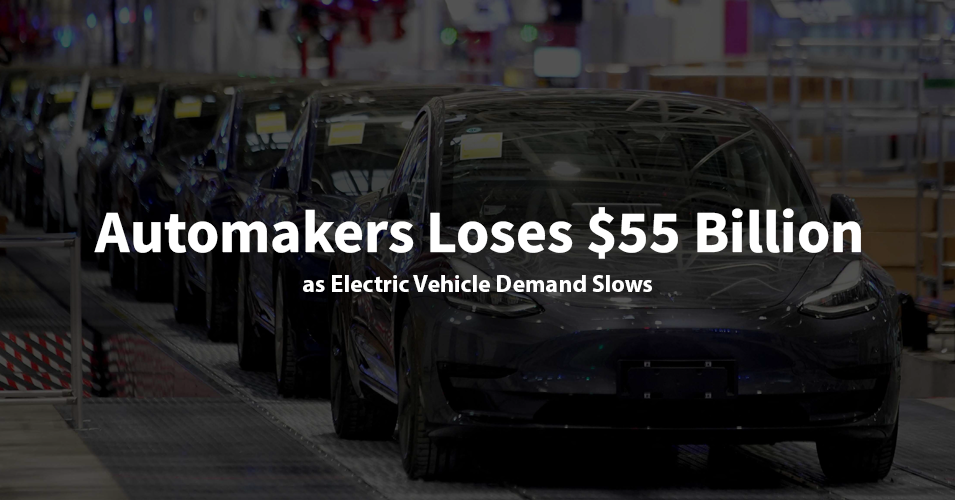
Global carmakers are facing a major setback as demand for electric vehicles grows more slowly than expected. Leading manufacturers such as Ford, General Motors, Volkswagen and Stellantis have collectively written off more than $55 billion after overestimating how quickly buyers would switch to electric cars.
The losses reveal the difficulty of moving from traditional vehicles to fully electric models. Although companies invested heavily in EV technology, many customers remain hesitant due to high prices, limited charging infrastructure and concerns about driving range and performance.
The situation has become more complicated as Chinese EV brands enter the global market with aggressive pricing, while changes in government incentives have added further uncertainty.
This challenge is not limited to the United States. European automakers, including Volkswagen and Stellantis, are also re-evaluating their strategies. Across North America, Europe and Asia, the transition to cleaner vehicles is proving more complex than originally expected.
Looking ahead, automakers are adjusting their plans. Hybrid vehicles are now being positioned as a practical step between petrol cars and fully electric models. Companies are also refining their global rollout plans to better match costs, infrastructure readiness and real consumer demand. While the electric future is still on the horizon, the shift is likely to take longer than first predicted.